Exercises beneficial for arthritis and those to avoid — How to reduce pain and maintain mobility
When you have arthritis, you might start worrying, “Will moving cause more pain?” In fact, low-impact exercise at an appropriate intensity nourishes cartilage, enhances joint stability, and alleviates pain. Conversely, high-intensity or high-impact exercise performed incorrectly can worsen inflammation. Today, we'll introduce principles applicable to joints like the knee, hip, and wrist, along with a routine you can start right away.
1) Why Exercise is Good for Arthritis
Joints benefit when moving, as this circulates synovial fluid and delivers oxygen and nutrients to the cartilage. Reduced movement weakens muscles and destabilises joints, creating a vicious cycle of pain. Stronger muscles surrounding the joints, such as the thighs and glutes, make walking and stairs easier. The goal isn't “zero pain”, but regular movement within a manageable range. Therefore, an intensity where you feel ‘slightly out of breath (RPE 4-6/10)’ is ideal.

2) Top 4 Good Aerobic Exercises
① Walking (flat ground/treadmill): Start by taking slightly shorter strides and walking in 10–15 minute intervals. Once pain stabilises, gradually increase to 30 minutes.
② Cycling (Indoor Bike): Set pedal resistance low, avoiding excessive knee flexion. Stimulates glutes and quadriceps, aiding joint stability.
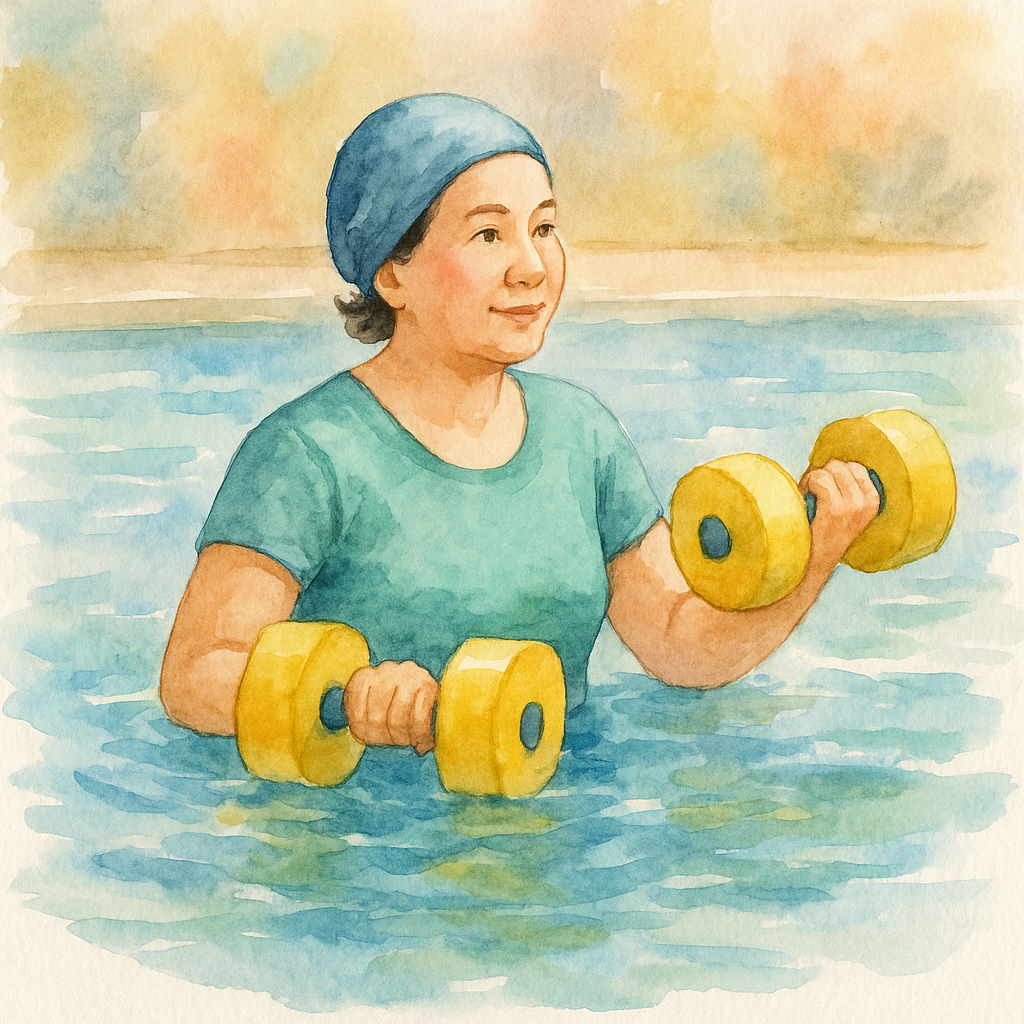
③ Aquatic Exercise/Aqua Walking: Buoyancy reduces weight load, minimising pain and excelling at restoring joint mobility.
④ Elliptical Trainer: Low-impact and beneficial for whole-body circulation, making it suitable for the initial recovery phase.
3) Suitable Strength Training (Low-Impact, Adjustable Weight Load)
Squats (Half/Box Squats): Utilise a chair height, sitting down and standing up slowly to approximately 90° knee flexion.
Leg Press (Light Weight): Feet shoulder-width apart, perform 10–12 repetitions within a pain-free range.
Hip hinge/Glute bridge: Builds gluteal muscles to distribute load away from knees and lower back.
Band side step: Strengthens hip abductors to aid gait stability. The principle is “form over weight”; if pain is felt, reduce the angle/range of motion or rest.
4) Stretching, Mobility, and Balance Exercises
Hamstring, Calf, and Glute Stretches: Hold for 20–30 seconds, performing 2–3 sets. The stiffer your joints, the more beneficial joint mobility drills (knee/ankle circles, hip external/internal rotation) before exercise will be. Balance can be trained simply with single-leg standing, step touches, and heel-toe walking, which are effective for fall prevention. Stretching should focus on “holding” within a pain level not exceeding 3/10, performed gently without bouncing.
5) Exercises to avoid (or those requiring caution)
High-impact exercises like jumping or modified lunges can cause repeated joint stress, potentially increasing inflammation. Heavy barbell squats, deep lunges, and deadlifts should only be introduced gradually once angle, weight, and form are fully stabilised. Deep squats (excessive flexion), unpaved running, stair intervals: if pain occurs, immediately reduce intensity and frequency. High-intensity interval training (HIIT) is also inadvisable during recovery—replace with low-intensity intervals if cardiovascular work is needed. The key principle is: ‘If pain increases, immediately reduce intensity.’
6) Weekly Basic Routine (Example: Beginner-Intermediate, 30–40 minutes)
Mon·Thu | Cardio: 10-minute warm-up (walking/stationary bike) → 20-minute main session (RPE 4–6) → 5-minute cool-down.
Tue·Fri | Strength: Half squats 10×2, Glute bridges 12×2, Band side steps 12×2, Leg press (light) 10×2. 60 seconds rest between sets.
Wed·Sat | Stretching·Balance: Hamstrings·Calves·Glutes 30 seconds each ×2, Single-leg stance 20 seconds ×3, Ankle·Knee mobility drills 5 minutes.
Sun | Rest: 15-minute walk + gently foam roll calves and thigh muscles.
→ If pain persists for over 24 hours, reduce intensity and frequency by 20–30% before reintroducing.
7) Four Principles of Pain Management
Principle 1 – Pain Scale: Proceed if pain during exercise is 4 or below on a scale of 0–10; adjust intensity/range for 5–6; stop for 7 or above.
Principle 2 – Next-Day Check: If pain is significantly worse 24 hours after exercise, reduce the next session by 20%.
Principle 3 – Warm-up and Cool-down: A 5–10 minute warm-up and 5-minute cool-down stretch are essential components.
Principle 4 – Progressive Overload: Increase the weekly total (time or volume) by no more than 10%. Consistency is key, not rapid results.
8) Tips by Body Part (Knee, Hip, Wrist)
Knee Arthritis: For half squats and leg presses, align toes and knees, avoiding excessive flexion. Build foundational fitness through flat-ground walking.
Hip Arthritis: Glute strengthening is key—place glute bridges, clamshells, and band side steps at the beginning of your routine.
Wrist/Fingers: Perform finger extension and flexion stretches, grip and release a grip ball 10–15 times × 2 sets. Maintain a neutral wrist position if pain occurs. When lifting weights, ensure stability with wrist supports.
9) Lifestyle Habits & Recovery
Reducing body weight by just 5% significantly decreases knee load. After walking or cycling, replenishing protein and fluids aids muscle recovery and reduces fatigue. Sleep is crucial for inflammation control, so maintain a consistent sleep rhythm with fixed bedtime and wake-up times. Minimise joint-compressing postures like prolonged standing or squatting. If seated for extended periods, make it a habit to stand and stretch for 2–3 minutes every hour.
10) When should you seek specialist or physiotherapy treatment?
If you experience swelling, heat, pain severe enough to wake you at night, a “locked” feeling in the joint, or sudden inability to bear weight, medical consultation should be prioritised. Imaging tests, injection therapy, or orthotic prescriptions may be necessary. Exercise should be tailored to your diagnosis and stage. When planning initially, seek feedback from a physiotherapist or exercise specialist to personalise your routine – this is far safer and more effective. The key is collaboration between treatment and exercise, not opposition.
- Good exercises: Walking, cycling, aquatic exercise, elliptical trainer + half squats, bridges, band exercises + basic stretching/balance.
- Avoid/Caution: Jumping, excessive deep squats, heavy barbells, unpaved running, strenuous HIIT.
- Principles: Pain gauge, next-day check, warm-up/cool-down, progressive overload.
- One-line summary: Low impact, regularity, posture first protects your joints.


댓글