반응형
Cat Litter Box Problem Solving Guide
Why Are Cat Litter Box Problems Important?
Cats are known as clean animals, yet surprisingly many owners struggle with litter box issues. Cats may eliminate outside the box, scatter litter excessively, or even refuse to use the box altogether. These problems aren't just bad habits; they can result from a combination of the cat's health, stress, and environmental factors.
Common Causes of Cat Litter Box Problems
- Location Issues
- Areas with heavy foot traffic, near noisy appliances, or stuffy corners may be disliked by cats.
- Cats prefer to eliminate in safe, quiet spaces. - Litter Issues
- Cats may refuse to use litter if they dislike its texture or smell.
- Some cats prefer deep litter, while others prefer a shallow layer. - Cleanliness Issues
- If the litter box isn't clean, cats may choose another location.
- Cats have much higher cleanliness standards than humans.
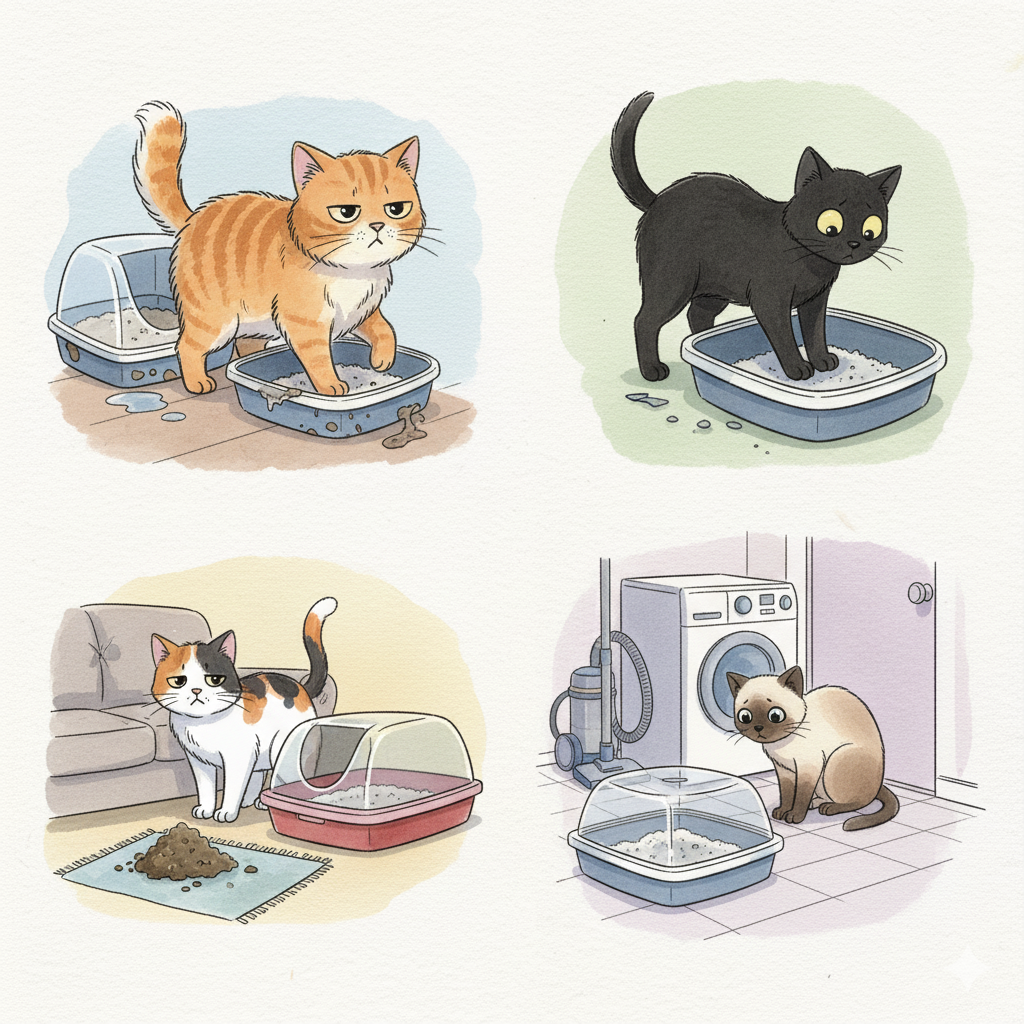
Health Issues
- Conditions like cystitis, kidney disease, or constipation can cause cats to avoid the litter box or have accidents elsewhere due to pain.
- In such cases, veterinary care is essential.
Practical Solutions for Problem-Solving
- Choosing the Right Litter Box Location
- Place it in a quiet, safe space.
- If you have multiple cats, ideally provide at least one litter box per cat plus one extra. - Litter Replacement & Experimentation
- Test various litters—unscented, fine-grained, coarse-grained—and choose the one your cat prefers.
- Instead of sudden replacement, gradually mix a small amount of new litter into the existing litter to help them adapt slowly. - Thorough Cleanliness Management
- Clean up waste at least 1-2 times daily. We recommend a full litter box change and thorough cleaning once a week.
- Using cat-specific cleaning products instead of strong-scented detergents reduces aversion. - Provide Positive Learning Experiences
- Immediately reward your cat with treats or praise when it uses the litter box correctly.
- Scolding for accidents is ineffective and only causes stress. - Health Check
If problems persist or bathroom habits change drastically, a veterinary checkup is essential.
반응형
Prevention and Management Tips
- Adequate Litter Boxes: Provide more litter boxes than the number of cats
- Regular Observation: Defecation frequency, urine volume, and stool consistency are health indicators.
- Minimize Stress: Environmental changes like new family members, moving, or loud noises significantly impact a cat's litter box habits.
While litter box issues are stressful for owners, they can actually be a distress signal from the cat. By systematically checking the environment, cleanliness, and health, most problems can be resolved.
반응형
'Pet Care' 카테고리의 다른 글
| What to Do When Your Cat Won't Eat: Essential Tips Every Pet Owner Should Know (0) | 2025.10.04 |
|---|---|
| Early Prevention Exercises for Canine Patellar Luxation (0) | 2025.10.01 |
| Complete Guide to Dog Separation Anxiety Symptoms and Training Methods (0) | 2025.09.23 |
| 강아지와 함께 하는 안전한 야간 산책을 위해 미리 알아두면 좋은 정보와 준비물 정보 (0) | 2021.09.01 |
| 강아지 건강하게 여름나기 위해서 알아야 하는 강아지 열사병 증상과 응급처치법!! (0) | 2021.08.24 |


댓글