[Blood Pressure Management] Do I Have to Take Blood Pressure Meds for Life? 5 Life-Changing Habits to Dramatically Lower Your Numbers Before Medication
Did your recent health checkup leave you feeling anxious when you heard, "Your blood pressure is a bit high. You need to manage it"? Doesn't that make your heart sink? Most people panic when diagnosed with ‘prehypertension’ (systolic 130-139 mmHg, diastolic 80-89 mmHg) or Stage 1 hypertension (just over 140 mmHg).
The first thought that likely comes to mind is the fear: “Oh no, do I have to take blood pressure medication for the rest of my life?” Stories from others about how once you start, you can't stop often make people hesitate to begin taking medication.
But there's good news! The period before blood pressure medication is prescribed is the ‘golden time’. Doctors themselves recommend starting with ‘lifestyle modifications’ for 3 to 6 months before immediately prescribing medication for early-stage hypertension or prehypertension. In fact, numerous studies show that simply changing your lifestyle can lower systolic blood pressure by nearly 10 to 20 mmHg.
Today, before you go to the hospital, I'll share 5 proven lifestyle habits you can practice at home to steadily lower your blood pressure.
Body Shaping Over Weight Loss: How Exercise & Stretching for Your Body Type Transforms Your 40s Figure
Body Shaping Over Weight Loss: How Exercise & Stretching for Your Body Type Transforms Your 40s FigureMany people in their 40s feel their figure has deteriorated even though their weight hasn't changed significantly. This is because their body shape change
misc-information.tistory.com
Part 1. Saying Goodbye to Salt: The First Step in Blood Pressure Management
The number one culprit behind hypertension in Koreans is undoubtedly ‘sodium’. Consuming too much salt (sodium) increases osmotic pressure in the blood, leading to increased blood volume. This, in turn, raises the pressure pushing against the blood vessel walls (blood pressure).
1. Eat only the solids, develop a ‘dip-only’ habit
The broth in dishes we casually eat like kimchi stew, jjamppong, and kalguksu contains more sodium than the daily recommended amount. Simply avoiding the broth can cut your sodium intake in half.
- Practical Tip: When eating soups or stews, use only chopsticks and focus on the solid ingredients. When eating fried foods or sashimi, avoid deep-dipping in soy sauce. Instead, lightly dip or just add wasabi—this ‘dip lightly’ habit is key.
2. Consume ‘Potassium’, the Relief Pitcher for Sodium Excretion
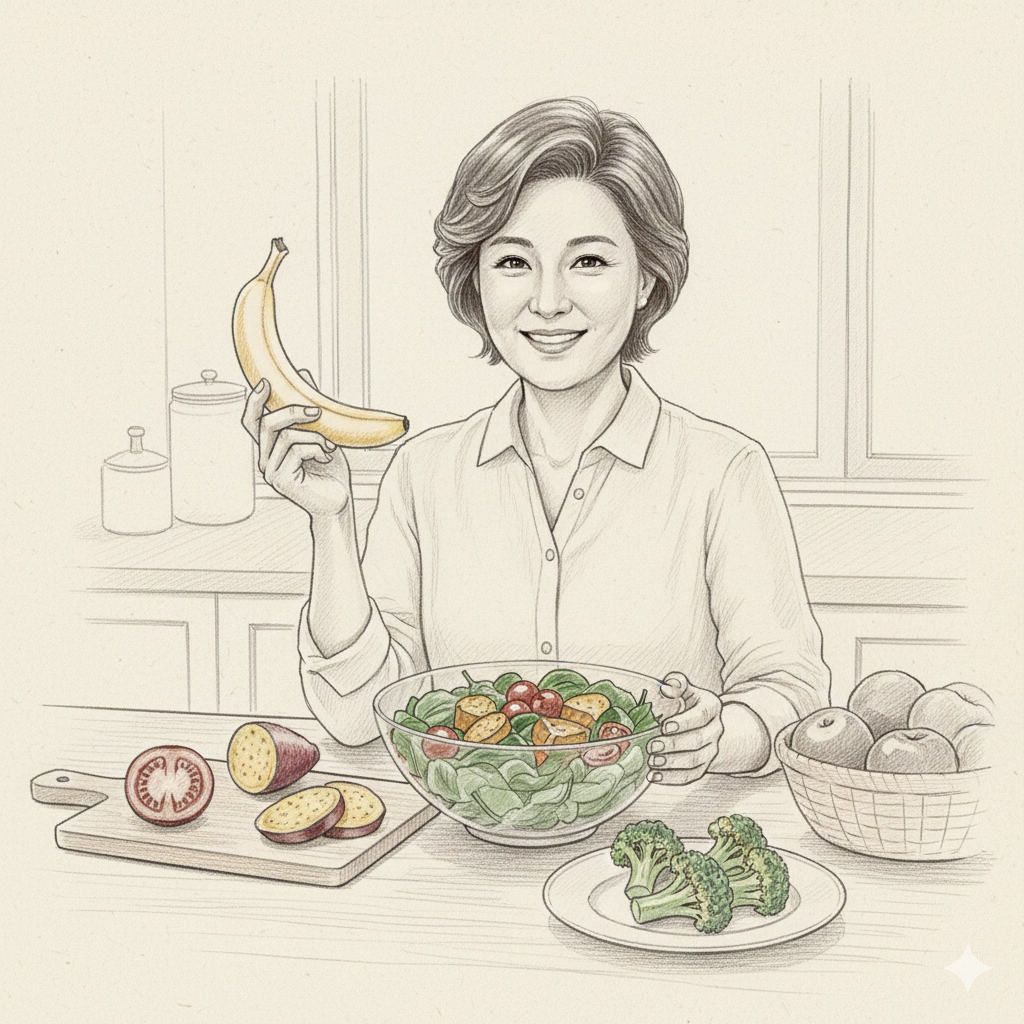
Already eaten something salty? You need to flush it out quickly! The nutrient that helps expel sodium from your body is ‘Potassium’.
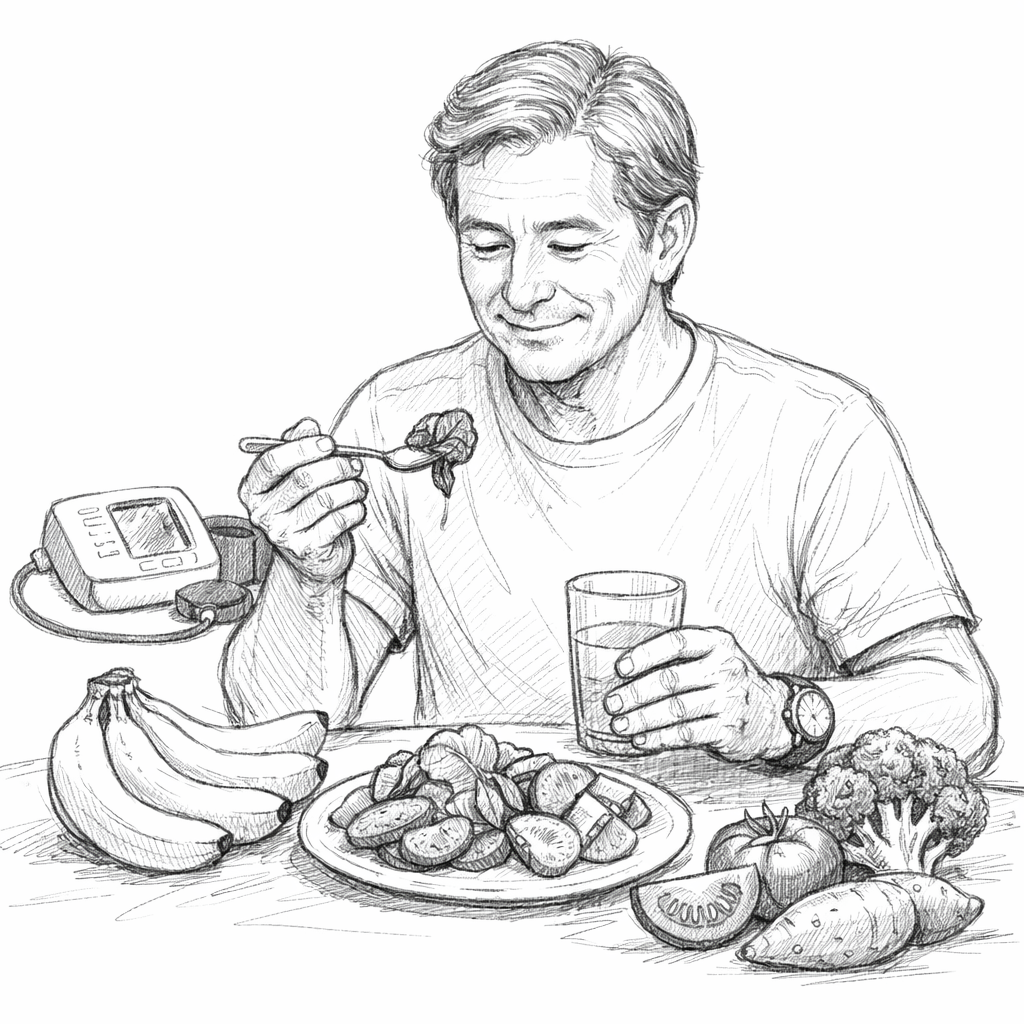
- Recommended Foods: Add bananas, spinach, tomatoes, sweet potatoes, and broccoli to your diet. Apples or bananas are especially good as a breakfast substitute. (However, those with kidney disease need to be cautious about potassium intake; consult your doctor!)
3. The ‘DASH Diet’ for Controlling High Blood Pressure
Developed by the U.S. National Heart, Lung, and Blood Institute, the DASH (Dietary Approaches to Stop Hypertension) diet is a globally recognized dietary approach for managing high blood pressure.
- Key: Increase whole grains, vegetables, fruits, and low-fat dairy; reduce red meat and sugar. Don't overthink it—start small tonight by swapping white rice for brown rice and adding one more vegetable side dish.
Part 2. When the scale's number goes down, the blood pressure monitor's number goes down too
Obesity, especially ‘abdominal obesity’, is hypertension's biggest enemy. When visceral fat accumulates, it secretes substances that constrict blood vessels, raising blood pressure.
📉 1. Weight loss of 1kg = Blood pressure reduction of 1-2mmHg
Surprisingly, weight and blood pressure are directly proportional. Losing just 5kg can lower systolic blood pressure by about 5-10mmHg. This effect is comparable to taking half a standard blood pressure pill.
- Goal Setting: Extreme dieting invites yo-yo effects. Aim to lose 1-2kg per month, targeting only about 5% of your current weight. The moment your body feels lighter, your blood pressure readings will lighten too.
🏃♂️ 2. What kind of exercise is best? ‘Cardio’ is the answer!
High-intensity strength training involving heavy weights can cause a sudden spike in blood pressure for hypertensive patients, so caution is advised. For lowering blood pressure, ‘cardio exercise’ that strengthens cardiovascular function is best.
- Recommended Exercises: Brisk walking, light jogging, swimming, cycling.
- Exercise Intensity: Moderate intensity is ideal—“enough to hold a conversation with someone beside you, but not enough to sing.” Consistently doing this for at least 30 minutes a day, 5 times a week, will expand your blood vessels and improve their elasticity, naturally lowering your blood pressure.
Part 3. Breaking Habits That Damage Your Blood Vessels
Even if you diligently manage your diet and exercise, failing to abandon habits that directly attack your blood vessels is like pouring water into a bottomless pit.
🚬 1. Cigarettes: A Time Bomb for Your Blood Vessels
Nicotine in cigarettes immediately stimulates the sympathetic nervous system upon inhalation, constricting blood vessels and raising blood pressure. During smoking, blood pressure can spike by 10–20 mmHg. Forget the idea that “mild cigarettes are okay.” Quitting smoking isn't a choice—it's essential for escaping hypertension.
Lifestyle Habits for Dementia Prevention: Brain Health Management You Must Start in Your 40s
Lifestyle Habits for Dementia Prevention: Brain Health Management You Must Start in Your 40sDementia isn't a disease that strikes suddenly; it's a gradual change in the brain that builds up over decades of lifestyle habits. Your 40s and beyond are the most
misc-information.tistory.com
🍷 2. Alcohol: Is One Drink a Health Tonic? No
While small amounts of alcohol may temporarily dilate blood vessels and slightly lower blood pressure, habitual drinking ultimately raises it. Alcohol not only raises blood pressure itself but also interferes with the effectiveness of blood pressure medication.
- Recommended limit: Men should limit to 2 drinks or less per day, women to 1 drink or less. If diagnosed with hypertension, moderation or abstinence is safest.
Part 4. Stress Management and Sleep: Tackle the Invisible Enemies
Ever heard the saying, “A hot temper brings hypertension”? Stress and lack of sleep keep our bodies in constant ‘fight mode’ (sympathetic nervous system overdrive), maintaining high blood pressure.
😴 1. The Importance of 7 Hours of ‘Deep Sleep’
During sleep, blood pressure naturally drops, and blood vessels rest. However, if you have trouble sleeping, snore, or have sleep apnea, your blood pressure remains elevated all night.
- Tip: Adjust your pillow height and put your smartphone away before bed. If you have sleep apnea, treatment is essential to control your blood pressure.
🧘♀️ 2. Relax Your Blood Vessels with Deep Breathing
When stressed, our bodies tense up and blood pressure rises. The easiest and quickest solution is ‘deep breathing’.
- How to practice: Inhale deeply through your nose for 4 seconds, hold for 7 seconds, then exhale slowly through your mouth for 8 seconds. Repeating this process for just 5 minutes activates the parasympathetic nervous system, relaxing blood vessels and immediately stabilizing blood pressure.
Blood pressure management is a marathon.
Hypertension doesn't develop overnight, so it won't disappear overnight either. The five methods shared today (low-salt diet, weight loss, aerobic exercise, quitting smoking/moderating alcohol, stress management) may seem obvious, but there is no other treatment as reliable and free of side effects.
One more crucial tip! Don't rely solely on hospital readings. Buy a home blood pressure monitor and check your blood pressure daily at the same time each morning. Knowing when your blood pressure rises and falls is the first step in managing it. You might have ‘white coat hypertension’ (where your blood pressure spikes only at the doctor's office).
Before relying on medication, give your body a chance to heal itself. Save some soup tonight, and take a 30-minute walk after meals. These small actions will gift you a strong heart and healthy blood vessels ten years from now. Cheers to your healthy blood pressure!


댓글