Survival Negotiation Skills at Work: 5 Practical Skills for Professionals in Their 40s
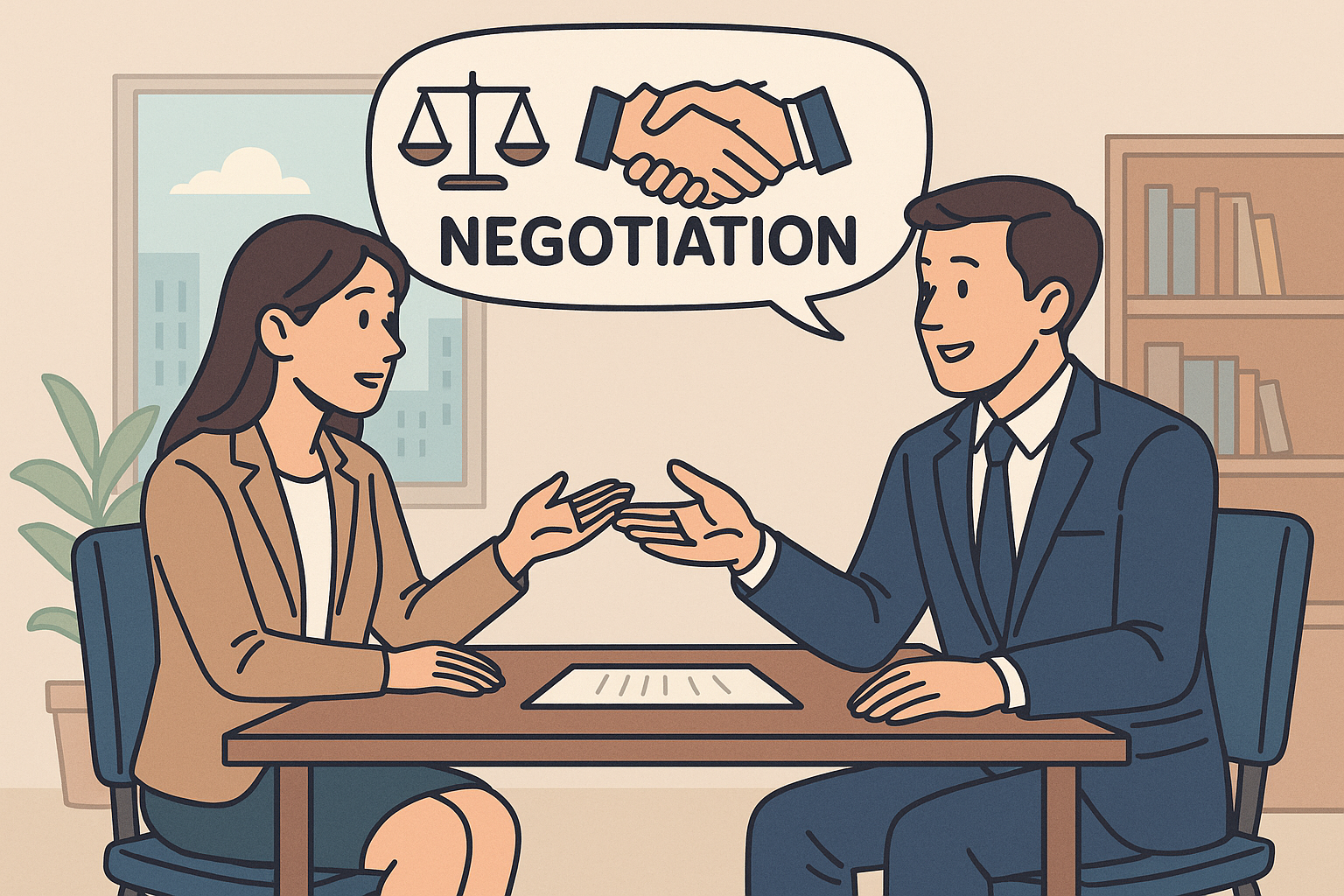
Negotiation in the workplace isn't just a skill needed for ‘special occasions’.
From salary negotiations, task distribution, project schedule coordination, to deciding whether to attend company dinners, we negotiate daily to get by.
Especially after turning 40, the skill of understanding the other party's position while achieving your desired outcome becomes more important than simply “pushing through your own opinion”.
Today, let's explore negotiation techniques to survive smoothly yet firmly in the workplace.
1. Aim to ‘Maintain Relationships’ Over ‘Winning’
Negotiation is not a fight.
Within the company, you must collaborate with the same people again and again.
Rather than trying to defeat the other party, finding a mutually satisfactory ‘compromise point’ is more important.
“This is my perspective, but how do you see it, Mr./Ms. ○○?”
This single phrase eases tension and opens the door to dialogue.
The essence of negotiation is a process of finding solutions while maintaining trust.
2. Focus on ‘benefits’ over emotions
Negotiations become difficult when emotions get involved.
“Why are they ignoring my opinion?” “This is unfair.”
When such thoughts arise, clarify the specific benefit you want to gain from this issue.
For example:
- “This Friday is tight for my schedule, but I can wrap it up by Monday morning instead.”
- “I'll take this project, but I'd like to request one more support staff member.”
By presenting conditions instead of emotions, negotiations become clear and rational.
3. ‘Pre-negotiation research’ is half the battle
A good negotiator isn't someone who talks well, but someone who knows the information well.
- What are the other party's priorities?
- What is the most important goal for their team right now?
- What alternatives can I offer?
Knowing this beforehand when entering a conversation
allows you to craft proposals from their perspective and lowers the chance of rejection.
Strategic persuasion based on prior research is far more powerful than impromptu emotional appeals.
4. Don't fear making the ‘first offer’
Many people make the mistake of “waiting for the other side to speak first” early in negotiations.
However, since the first offer sets the benchmark (anchor), it can steer the negotiation in your favor.
For example, in a salary negotiation: “Considering my experience and achievements, I believe a level of ○○ is appropriate.”
By proactively setting the benchmark, subsequent discussions will center around that figure.
However, it's crucial to present logical justification (achievements, market averages, role changes) rather than making unreasonable demands.
5. Decide the negotiation's impression with your ‘closing statement’
The ‘closing impression’ lingers longer than the outcome itself.
“Thank you for your understanding. Let's work together to find a better path forward.”
Such statements build trust and make future negotiations easier.
Your final words complete your negotiation skill.
A good negotiator is always preparing for the next conversation.
Negotiation isn't a battle of words; it's strategy within a relationship.
It's not about winning, but finding a path together.
To summarize:
- The purpose of negotiation is ‘gain + maintaining the relationship’
- Speak with ‘conditions,’ not emotions
- Preparation is half the battle
- The first proposal sets the benchmark
- The closing leaves the lasting impression
Negotiation is a daily routine at work.
But a true negotiator isn't someone who ‘wins’ over the other party, but someone who makes the other party want to work with them again next time.
Try starting like this in today's meeting or conversation.
“How about we work together to find a good solution?”
That one phrase might just elevate your career to the next level.


댓글