Mid-Term Settlement of Severance Pay: Why Receiving It Carelessly Leads to ‘Double Taxes’ and 3 Tax-Saving Tips
When unexpected large sums are needed during your career, many people consider mid-term settlement of their severance pay. It seems like an attractive option to reduce loan interest burdens. But HOLD UP! If you don't carefully calculate the taxes before withdrawing your severance pay early, you could face an unexpected tax bomb when you actually retire later.
In this blog, we'll explore the necessity (eligibility requirements) of mid-term severance pay settlement, the tax calculation pitfalls, and how to legally reduce taxes using the ‘Special Tax Settlement for Retirement Income’.
1. Can Anyone Receive Interim Severance Pay? (Necessity Check)
Severance pay is generally due upon retirement. However, under the Workers' Retirement Benefits Guarantee Act, interim settlement during employment is permitted only under specific circumstances.
Requirements for Interim Settlement (Key Items) | Sample Supporting Documents
① Home purchase by a non-homeowner Real estate purchase contract, certified copy of the property register
② Payment of jeonse deposit/security deposit for residential purposes by a non-homeowner Lease agreement, deposit payment receipt
③ Medical expenses for the employee, spouse, or dependents exceeding 6 months Doctor's diagnosis or medical opinion
④ Bankruptcy declaration or commencement of personal rehabilitation proceedings Relevant court decision document
⭐ Important Notes:
- DB-type (defined benefit) retirement pensions do not allow mid-term settlements; only DC-type (defined contribution) pensions permit this.
- Even if requirements are met, company consent is required, and payment is not mandatory for the company.
2. The Mid-Term Settlement Trap: Why Does a ‘Tax Bomb’ Explode?
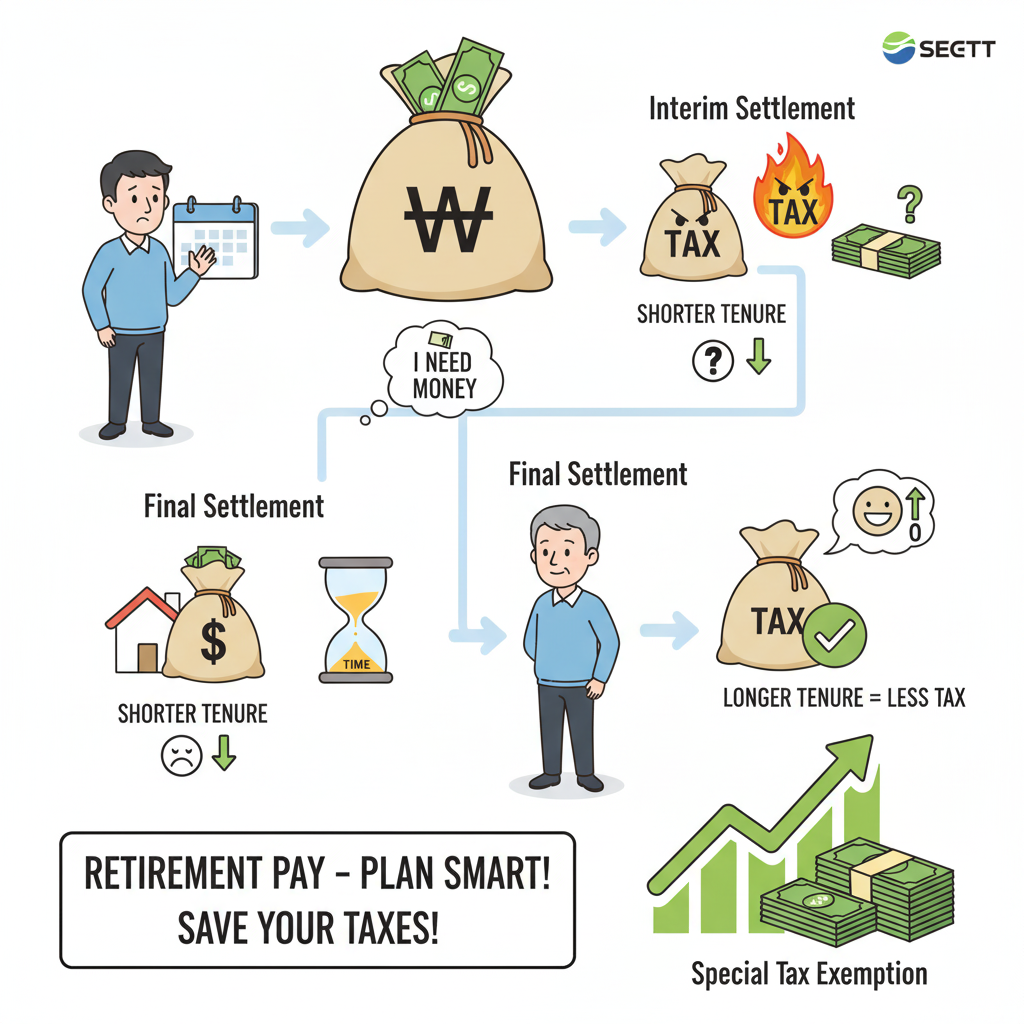
Even if receiving the same total retirement payout, employees who opt for interim settlement are likely to pay significantly more taxes. The reason lies in the retirement income tax calculation method.
Retirement income tax is designed to provide tax benefits to long-term employees. The longer the service period, the larger the ‘service period deduction’ amount. Combined with the ‘annualized income method’, which divides the retirement payout by years of service to lower the tax rate, this significantly reduces the tax burden.
😱 The critical reason why tax burden increases during interim settlements
The moment you settle early, your service years are ‘reset’.
- Regular Retirement: Your entire service period from hire date to retirement date is recognized.
- Retirement After Interim Settlement: Only the period from the day after the last interim settlement to the final retirement date is recognized as service years.
In other words, even if you worked for a long time, receiving a large honorary retirement payment in a short period after an interim settlement means your service period is shortened, leading to a disadvantage in tax calculations. Even if you receive the same 300 million won as retirement pay, someone with 5 years of service could pay up to 5 times more tax than someone with 30 years of service.
3. The Ultimate Tax-Saving Strategy to Avoid the Tax Bomb: ‘Special Tax Settlement for Retirement Income’
If you've already received an interim settlement, don't worry. The government operates the ‘Special Tax Settlement for Retirement Income’ system to compensate for these tax disadvantages.
This system calculates taxes by combining both the previously received interim retirement payment and the final retirement payment into a single period of service (from the date of hire to the final retirement date).
✅ 3-Step Guide to Utilizing the Special Tax Settlement
Step Details Key Action
Step 1: Prepare DocumentsEnsure you have the ‘Retirement Income Withholding Tax Receipt’ issued at the time of your interim settlement.
(Issued by your former company or local tax office) Obtain the withholding tax receipt
Step 2: Request from Company Before receiving your final severance payment, submit the documents to your company (accounting team) requesting, “Please apply the Special Tax Settlement for Retirement Income.” Apply for the special provision before payment
Step 3: What if you missed it? If you've already received your severance pay, you can apply for a refund by filing a ‘tax adjustment request’ with the local tax office within 5 years of your retirement date. File a tax adjustment request within 5 years
💰 Tax Savings Effect: Applying this special provision can save you millions of won in taxes. For example, taxes that would have been 16 million won without the provision could drop to around 10 million won when applied.
Treat your severance pay as ‘retirement assets’ and approach it carefully!
Mid-term severance pay settlements can be useful in urgent situations, but they can increase the tax burden on your most important retirement assets. Be sure to perform a tax calculation simulation before settling, and when retiring, don't forget to apply for the ‘Special Tax Settlement for Retirement Income’ to protect your valuable retirement funds!


댓글