Vitamin D & Calcium: The Complete Guide to Bone Health for Your 40s
In your 40s, reduced activity levels, hormonal changes, and less sun exposure cause bone resorption (breakdown) to begin outpacing bone formation (rebuilding). Women experience accelerated bone density loss around menopause, while men see it accelerate with activity levels and weight fluctuations. Simply increasing calcium intake alone is only half the solution. To be effective, you must boost absorption with vitamin D and send “growth signals” to your bones through exercise and sleep.
1. Recommended Intake (Targeted for 40s, Informational Guide)
For those in their 40s, a daily intake of approximately 1,800–2,200 kcal is recommended based on activity level. Within this, consistently aim for 700–1,000 mg of calcium and 600–1,000 IU (15–25 μg) of vitamin D. Personalization is necessary based on specific conditions, medication use, and test results (25(OH)D, bone density).
- Calcium: Primary building block for bones and teeth; essential for muscle contraction and nerve transmission
- Vitamin D: Increases calcium absorption in the intestines and enhances calcium deposition in bones (Managing both is key)
2. ‘Plate Design’ for Daily Life in Your 40s (Fill with food)
One meal plate should be ½ vegetables (kale, broccoli), ¼ protein (salmon/tofu), ¼ whole grains (brown rice/oats), plus calcium sauce (yogurt/anchovies). This balances calcium, vitamin D, and protein in a single meal for those in their 40s. Calcium absorption is more stable when consumed in divided doses, no more than 500mg at a time.
Calcium Sources
- Dairy: Milk, yogurt, cheese (low-fat/unsweetened)
- Non-dairy: Anchovies, fish eaten whole with bones, tofu/beans, kale/broccoli, calcium-fortified soy milk/oat milk
Vitamin D sources
- Fatty fish (salmon, mackerel, sardines), egg yolks, vitamin D-fortified milk/cereal, sun-dried mushrooms
One-plate ratio (applies to both office and home)
- ½ Vegetables (kale/broccoli/salad)
- ¼ Protein (salmon/chicken breast/tofu)
- ¼ Whole Grains (brown rice, oats) + Calcium Source (yogurt, anchovy topping)
Real-life Example (When lunch feels greasy):
Dinner: Tofu steak + kale salad (olive oil/vinegar) + small yogurt → Balanced calcium, protein, and healthy fats.
3. 6 Tips for Better Absorption
Vitamin D: Take with meals (fat-soluble). Calcium: Split between morning/evening (≤500mg per serving). Reduce excess salt/caffeine and get 10–20 minutes of sunlight daily to boost absorption and retention rates. For spinach, nuts, and beans: Blanch, soak, or ferment to reduce oxalic acid/phytic acid effects.
- Take Vitamin D with meals: Fat-soluble, absorption ↑ when consumed with fats
- Split calcium intake to ≤500mg per dose: Divide between morning and evening
- Reduce salt and caffeine intake: Calcium excretion ↑ → Drink coffee with water/milk
- Manage oxalic acid and phytic acid: Blanch spinach; soak/ferment nuts and beans to reduce absorption interference
- Magnesium and Vitamin K2 Synergy: Helps direct calcium to bones, not blood vessels
- 10–20 Minutes of Sunlight (Morning): Brief, regular exposure of arms and legs (avoid overexposure)
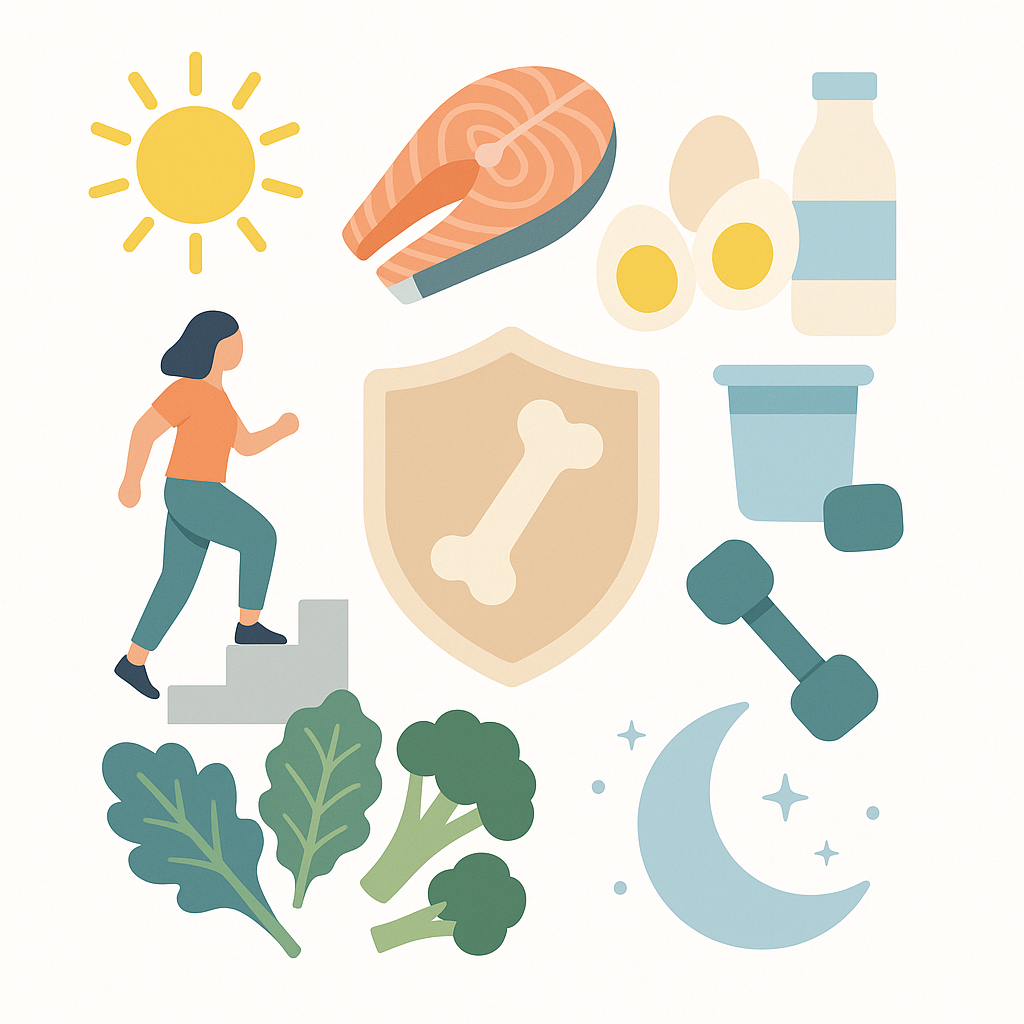
4. Supplement Selection Guide
If supplements are needed, choose calcium citrate (relatively comfortable on an empty stomach) or carbonate (with meals). For vitamin D, start with D3 (cholecalciferol) in the range of 600–1,000 IU daily. Consult your doctor if you have a history of kidney stones or take specific medications (diuretics/thyroid/steroids).
- Calcium Form
- Vitamin D: D3 (cholecalciferol) recommended
- Combination products: Calcium+Vitamin D products are convenient, but avoid excessive total intake
Caution: If you have a history of kidney stones or are taking medications like diuretics, thyroid drugs, or steroids, consult your healthcare provider before use
5. Exercise sends ‘bone growth signals’
For bone health in your 40s, base your exercise on 150 minutes of cardio per week (brisk walking, stairs, light jogging) and strength training 2–3 times per week (squats, hip hinges, rows). Reduce fall risk with balance and core exercises (yoga/Pilates). Increase volume by no more than 10% every 2 weeks, and adjust intensity immediately if pain occurs.
- Weight-Bearing Aerobic Exercise (150 min/week): Brisk walking, stair climbing, light jogging, jumping rope → Delivers micro-shocks to bones → Increases bone formation signals↑
- Strength Training (2–3 times/week): Lower body, hips, back (squats, hip hinges, rows) → Maintains bone density Core
- Balance·Core: Yoga·Pilates for Fall Prevention → Reduces fracture risk
Start light, increase volume within 10% every 2 weeks (avoid sudden jumps or rapid weight increases)
6. ‘Recovery Time’ Shaped by Sleep and Lifestyle Habits
7 hours of sleep + fixed wake-up time stabilizes bone remodeling rhythms. Moderate drinking, smoking cessation, and weight management reduce factors increasing bone resorption, helping maintain bone density. Dim lights and screens 90 minutes before bed and set bedroom temperature to 18–20°C.
- 7 hours of sleep + fixed wake-up time: Optimizes bone remodeling hormone rhythms
- Moderate alcohol consumption and smoking cessation: Heavy drinking and smoking ↓ bone formation / ↑ bone resorption
- Weight management: Excessive underweight or rapid dieting lowers bone density
7. Checklist for Your 40s (Signals Suggesting Consultation)
- Family history of osteoporosis/low-weight fractures in parents or siblings
- Early menopause, long-term steroid use
- Persistent back pain, feeling shorter
- Persistent abdominal pain, nausea, constipation after supplement use → Need dose/formulation adjustment
- → If necessary, get bone density scan (DXA) and check 25(OH)D levels
Bone health in your 40s isn't just about “more calcium”—it's the combination of calcium + vitamin D + exercise + sleep. Start today with these three things: one meal with salmon or tofu, 10 minutes of stairs, and vitamin D with your meal. Your bones will respond quietly, but surely.


댓글