Healthy Diet Planning: Balancing Protein, Dietary Fiber, and Sugar Restriction (Practical Guide for Your 40s)
Diet isn't a battle of willpower—it's a matter of design. Sufficient protein and dietary fiber promote lasting fullness, naturally reducing snacking and overeating. Conversely, high sugar (especially sugar, high-fructose corn syrup, refined carbs) causes blood sugar to spike sharply then drop quickly, leading to repeated cycles of fatigue and cravings. After age 40, basal metabolic rate gradually decreases, so changing your diet composition lasts longer without yo-yo effects than cutting portion sizes.
1. Protein: The Foundation of Satiety, Muscle, and Metabolism
Protein has a high thermic effect (calories burned during digestion) and takes longer to digest, maintaining satiety longer. For those in their 40s, aim for 1.0–1.2g/kg/day as a baseline. If exercising, adjust within the range of up to 1.6g/kg/day. Rather than consuming it all at once, distribute 20–40g per meal evenly to maintain consistent muscle-building signals. Create a sustainable combination by mixing animal sources like lean meat, fish, eggs, and Greek yogurt with plant sources like tofu, beans, lentils, oats, and nuts. Mornings often lack protein, so establishing a simple routine like eggs + yogurt + fruit or tofu scramble + brown rice toast makes your day easier.
Practical Tip: Make “one-quarter of your plate protein” a rule. When eating out, swap fried or heavily seasoned dishes for grilled, steamed, or salad-topped protein options.
2. Dietary Fiber: Controls Blood Sugar, Gut Microbiome, and Inflammation All at Once
Dietary fiber swells like gel in the stomach, increasing satiety and slowing sugar and fat absorption in the intestines. Aim for 25–30g daily. Prioritize vegetables, fruits, beans, whole grains, and nuts over processed supplements for better nutritional balance. Soluble fiber (oat β-glucan, psyllium husk, apple/pear pectin) helps lower post-meal blood sugar and LDL cholesterol. Insoluble fiber (vegetable stems/leaves, brown rice) aids bowel movements to prevent constipation. Consuming both types together improves gut microbiome diversity. Rapidly increasing fiber may cause bloating, so increase gradually with water.
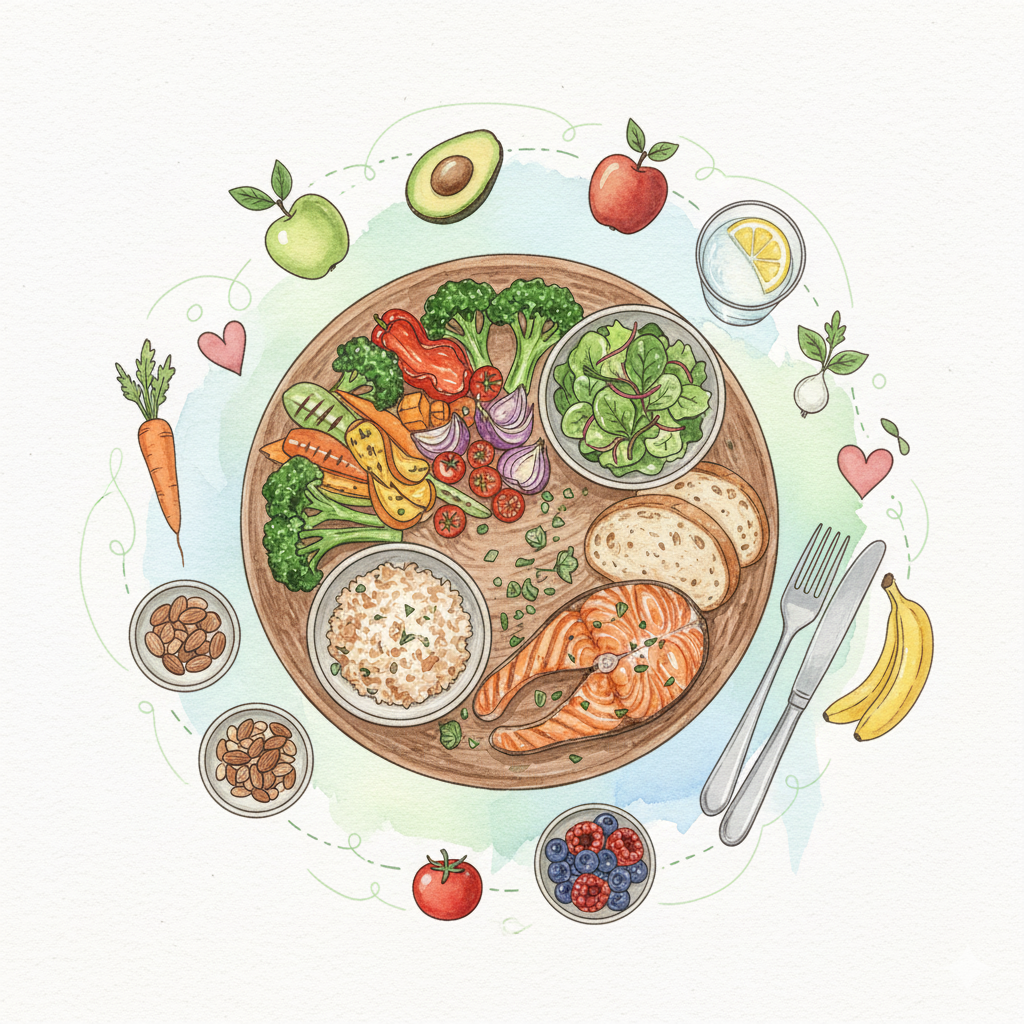
Practical Tip: “Fill half your plate with colorful vegetables and fruits”—add a scoop of beans/lentils to salads, switch grains to brown rice, oats, barley, and make snacks whole fruit + a handful of nuts your go-to.
3. Limit Added Sugars: Prevent Energy Rollercoasters
Sugars (especially granulated sugar, high-fructose corn syrup, and syrups) are calorie-dense yet satiety-poor, leading to more frequent, larger portions. A realistic goal is to limit added sugars to 5–10% of total daily calories (25–50g for a 2,000-calorie day). Check for " Check for “sugar-free” labels, and switch beverages to water, sparkling water, or unsweetened tea to significantly reduce daily sugar intake. Replace sweet processed foods like bread, cereal, and yogurt with the ‘plain + toppings (fruit, nuts, cinnamon)’ approach. Opt for whole fruit instead of juice, and group snacks immediately after meals whenever possible to reduce snack frequency, thereby lowering blood sugar fluctuations.
Practical Tip: Check both “Sugars (g)” and “Total Carbohydrates vs. Fiber (g)” on labels. The higher the fiber-to-sugar ratio, the longer your satisfaction lasts.
4. Meal Design: The Balanced Formula for One Meal (5+ sentences)
Fill your plate with ½ vegetables/fruit, ¼ protein, ¼ whole grains + a small amount of healthy fat for balanced nutrition without complex calculations. This structure automatically achieves adequate protein, sufficient fiber, and limited sugar. When dining out, reduce rice/noodles by half and add protein toppings (salmon, tofu, chicken breast) to ensure fullness. Request sauces on the side to save on sugar and sodium. Swap creamy salad dressings for oil-and-vinegar dressings to maintain flavor while cutting calories. Make it a routine to have 1 cup of water or unsweetened tea after meals to quickly curb sweet cravings.
Sample Plate: Kale, cherry tomato, and cucumber salad (1 tsp olive oil) + 120g grilled salmon + ½ cup brown rice/oatmeal + ½ apple.
5. Timing & Frequency: The ‘Bundling’ Strategy for Snacks
Eating snacks frequently in small amounts can trigger frequent insulin release, leading to fatigue and continued snacking. Bundle snacks into 1–2 times per day and, if possible, schedule them immediately after meals to minimize blood sugar fluctuations. Snacks containing both protein and fiber (e.g., Greek yogurt + berries, hard-boiled egg + cherry tomatoes, whole-grain crackers + hummus) are beneficial for sustained fullness. Before exercise, opt for light carbs + protein (banana + yogurt); after exercise, consume 20–40g of protein to aid recovery. Late-night snacks can impair sleep quality, so stop eating at least 3 hours before bedtime.
Practical Tip: Establishing personal rules like “Only eat when hunger signals reach 6/10 or higher” can reduce unconscious snacking.
6. When Eating Out: Lowering the Chance of Failure
When looking at the menu, look for items that show protein and fiber first (salad + toppings, grilled/steamed dishes, grain bowls). Halving rice/noodles + adding protein alone significantly changes satiety and calorie density. Request sauces/dressings on the side, and boost satisfaction with sparkling water + lemon instead of sweet drinks. For dessert, share or get a small portion, enjoying just one bite right after your meal. If you can't avoid situations like company dinners or business trips, don't drastically cut back on your next meal; instead, restore balance by focusing on vegetables and protein.
Practical Tip: Instead of thinking ‘Today was a failure,’ use the “Restore at the next meal” rule to prevent yo-yo effects and reward psychology.
7. Sample Weekly Meal Plan
- Mon: Salmon Salad Bowl (Oats, Avocado, Veggies) / Snack: Greek Yogurt + Nuts
- Tue: Tofu Steak + Sautéed Mushrooms + Brown Rice / Snack: Whole Pear
- Wed: Chicken breast vegetable stew + whole wheat bread / Snack: Boiled egg + cucumber
- Thu: Lentil soup + mixed grain rice + pickles / Snack: Yogurt + berries
- Fri: Grilled beef tenderloin + roasted vegetables + quinoa / Snack: Whole grain crackers + hummus
- Sat: Shrimp and Vegetable Stir-fry + Brown Rice / Snack: Apple + Handful of Peanuts
- Sun: Grilled Fatty Fish + Spinach Namul + Barley Rice / Snack: Banana + Walnuts
Common to all days: Water/Unsweetened Tea, keep beverage sugar content close to 0.
A healthy diet isn't about cutting calories; it's about redesigning the composition. Adequate protein (¼ plate), Plenty of fiber (½ plate), Limited sugar (check labels + 0 sugar in drinks)—rotate just these three for 2 weeks, and you'll notice improved energy and focus without hunger. Start today with these three small changes: add protein at breakfast, 2 cups of vegetables at lunch, zero sugary drinks. Consistency conquers everything in your diet.


댓글