Health Management for 40s and 50s: A ‘Burn 300kcal Daily’ Routine Through Walking, Stair Climbing, and Increasing Everyday Movement
Exercise becomes harder the more you think about it, but everyday movement accumulates without needing to be planned. This is called NEAT (Non-Exercise Activity Thermogenesis). It changes calorie expenditure, circulation, and even your mood without needing to change into workout clothes. After age 40, muscle mass and metabolic rate gradually decline. Therefore, small movements throughout the day are more effective for long-term body fat and health management than a single “hour-long workout.” This article kindly outlines how to flexibly (adapt to your situation) increase walking, stair use, and daily activities. Starting today, let's design a day focused not on moving “more,” but on moving more often.
1. Why Flexible Lifestyle Habits: The Power of NEAT
Even on days you can't make it to the gym, NEAT activities like walking, standing, and household chores protect your calorie expenditure and metabolic health. Especially, a 10-minute walk after meals helps smooth out blood sugar spikes, breaking the post-meal drowsiness and binge-eating cycle. Breaking it into 3-5 sessions throughout the day reduces fatigue buildup and eliminates the pressure of “if I miss one, it's over.” Frequent movement also loosens stiff muscles around the waist and hips, reducing neck/shoulder stiffness and lower back pain. The key isn't perfect workouts, but the sum of short, frequent movements. Even if your calendar is packed, your body's overall fitness can still improve.
2. Walking: The 2,000-Step Boost Strategy
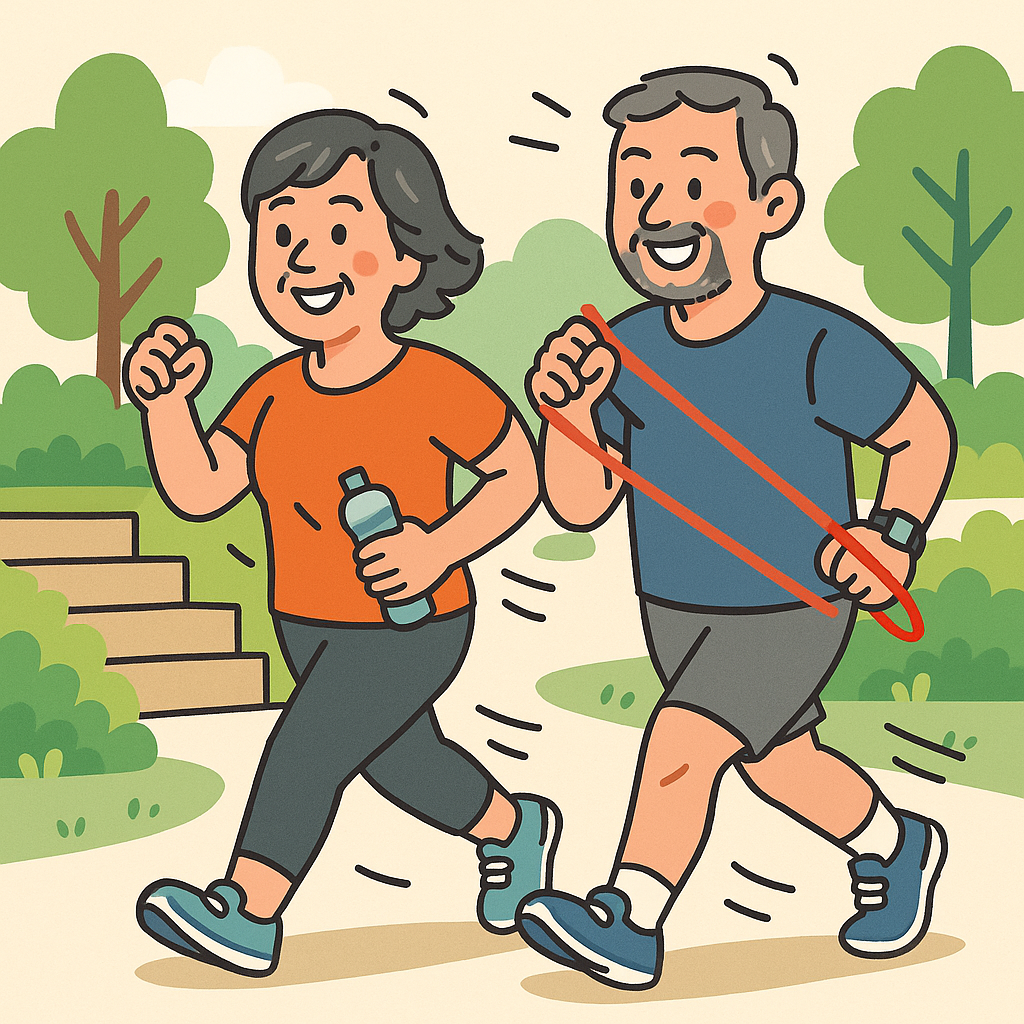
The easiest way to start is to get off your bus or train one or two stops early and walk the rest of the way. This naturally adds 1,500 to 2,000 steps round trip. If you're short on time, even walking back and forth between your home–elevator–front door for just 5 minutes is beneficial. Take “naturally long” strides and swing your arms “small and rhythmically” to steadily raise your heart rate. Land heel-to-toe (heel-midfoot-forefoot) to reduce calf strain. Warm up slowly for 5 minutes before increasing speed. If possible, incorporate 10-minute post-meal walks twice daily to manage blood sugar and satiety. On rainy days, pre-plan indoor routes like hallways, stairwells, or malls to lower failure rates.
3. Stair Use: Short but Powerful Cardio & Lower-Body Stimulation
Instead of the elevator, always take the stairs for two floors. For three floors or more, compromise by “taking the stairs up and the elevator down.” Stairs stimulate large lower-body muscles (glutes, quadriceps) to help maintain basal metabolic rate. Lightly grip the handrail and lean your upper body slightly forward to reduce knee strain. Step firmly with your whole foot for stability. Maintain a steady pace by breathing rhythmically, like inhaling/exhaling every two steps. Start with one set (up two flights) and gradually increase to 2-3 sets. If you get too winded, immediately recover by walking at a normal pace. If you have knee pain, prioritize safety by going slowly, landing with your whole foot, and wearing shoes with heel cups.
4. Finding ‘Hidden Calories’ at Home/Work: Automate with Routines
Combine 2 minutes of brushing + 20 squats during morning prep to make your first move of the day smoother. Take calls standing whenever possible, and switch to walking back and forth in the hallway for calls over 3 minutes. Use the furthest spot for the printer, water cooler, or trash can for bonus points. Watch TV with plank/bird dog during commercials, and finish dishes with 30 calf raises at the sink. Add just 3 minutes of stretching (neck, thoracic spine, hamstrings) around lunchtime to boost afternoon productivity and focus. These micro-activities are the most realistic way to burn 200–300kcal daily without mental fatigue.
5. Tracking & Goal Setting: Translate Numbers into Action
Start with a daily goal of 6,000 steps for the first two weeks. Once accustomed, increase to 7,500–8,500 steps. More important than step count are your pace (steps per minute) and activity frequency. 10 minutes × 3 times is better for metabolism than one 30-minute session. Even without a smartwatch, your phone's health app is sufficient. Just record your steps at the same time each evening. Building a “streak” of consecutive successful days makes motivation easier. For weekly totals, track only three things: total steps + flights of stairs climbed + post-meal walks. Numbers aren't for comparison; they're your compass for adjusting your actions.
6. Safety·Posture·Foot Care
Start with walking shoes with adequate cushioning, choosing models comfortable for your forefoot and heel. If you have foot pain (plantar fasciitis), shortening your stride + calf stretching is the top priority. If your back or neck feels stiff, keep your gaze 10 meters ahead and slightly tuck your chin to maintain an upright upper body line. When climbing stairs, taking them one step at a time with a steady rhythm is safer than taking two steps at a time. If you experience warning signs like dizziness, chest pain, or severe shortness of breath, stop immediately, rest, and check your condition. Health is a marathon, not a sprint.
Flexible lifestyle habits aren't “exercise you make time for,” but movement that fills the gaps between your time. Squeeze in walking, stairs, and small household tasks throughout your day, and while your calendar stays the same, your condition, waistline, and sleep will change. Today, try just these three things: get off one stop early on your commute, take the stairs to the second floor instead of the elevator, and walk for 10 minutes after meals. Small, repeated actions add up, and your body will prove it first.


댓글