Recommended Eastern Europe Travel Itinerary — Comprehensive Guide to Schedule/Cities/Travel Tips
Eastern Europe offers relatively great value for money, where medieval charm coexists with modern culture. With well-planned routes, it becomes a highly satisfying destination. This article outlines an easy-to-follow, relaxed itinerary based on public transport (trains/buses), tailored to different travel durations.
1) 7–9 Day Classic Route: Prague–Vienna–Budapest
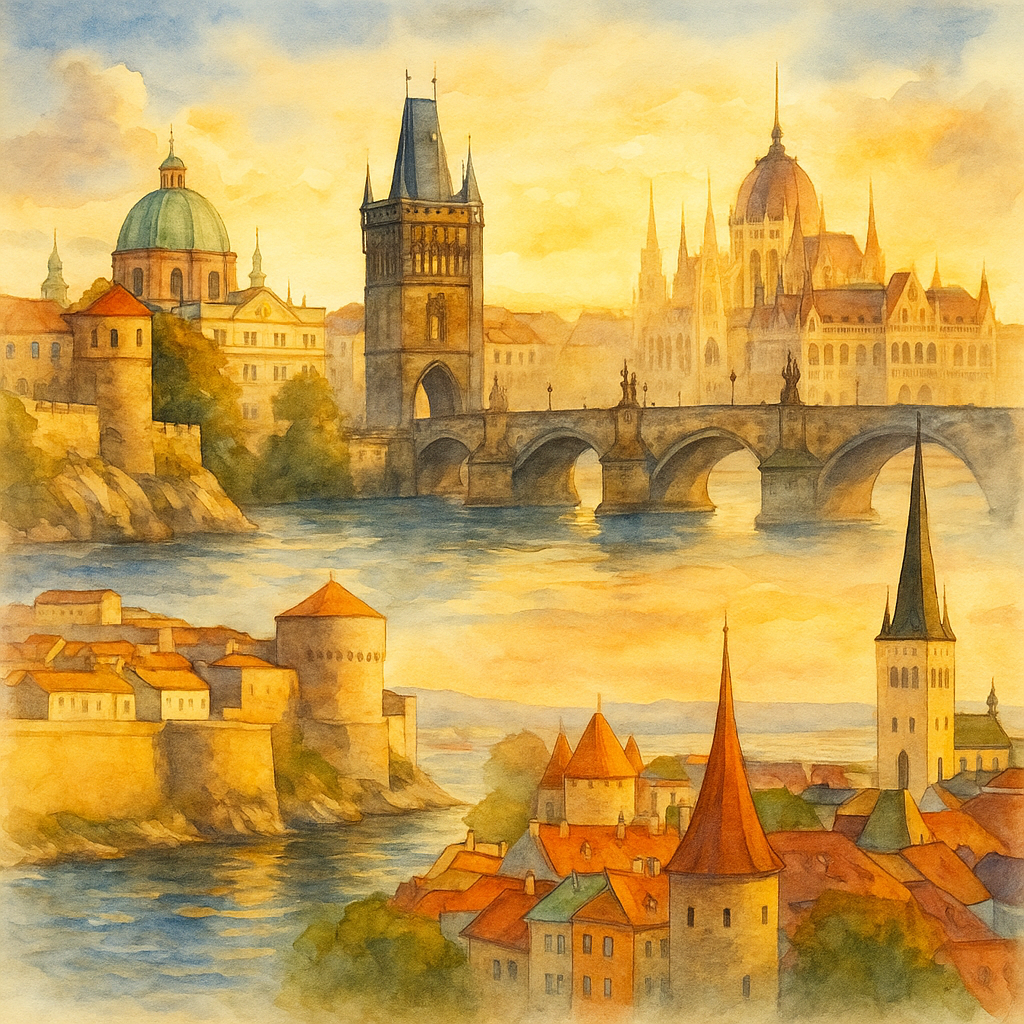
This is the most popular Czech Republic–Austria–Hungary itinerary. After 2–3 nights in Prague, take in the Old Town, Prague Castle, and the night views from Charles Bridge. Then, travel by Railjet to Vienna (2–3 nights) to follow the “royal route” through St. Stephen's Cathedral, the Kunsthistorisches Museum, and Schönbrunn Palace. Then, travel by train to Budapest (2–3 nights) to conclude with the Danube River night views, Buda Palace, and Széchenyi Thermal Baths. These three cities offer a good balance of night views, music, and thermal baths, making them ideal for a first visit to Eastern Europe.

2) 10–12 Days Cultural & Historical Extension: Kraków–Wrocław–Prague–Dresden (Optional)
Poland's Krakow (3 nights) is a “high-density historical city” featuring its medieval Old Town, Wawel Castle, and the Wieliczka Salt Mine. Next, Wrocław (2 nights) offers the charm of searching for dwarf statues, exploring the Old Town Hall, and strolling along the Oder River, revealing Poland's lighter side. Travel by train to Prague (3 nights), and if time permits, experience Baroque art in Dresden (1 night/day trip). Here, you can appreciate Poland's distinctive colour palette, distinct from the Viennese classical elegance of Eastern Europe.
3) Balkan Sensibility 8–10 days: Dubrovnik–Kotor–Mostar–Sarajevo–Belgrade
In Dubrovnik (2 nights) on the Adriatic Sea, enjoy trekking along the city walls and exploring the old town's alleyways. Montenegro, Kotor (1–2 nights) offers fjord views. Witness the golden sunset over Stari Most in Bosnia, Mostar (1 night), then stroll through Sarajevo (2 nights)'s city centre where Ottoman and European cultures intertwine. Finally, conclude in Belgrade (2 nights) with night views of the confluence of the Danube and Sava rivers and its bohemian streets. This itinerary involves frequent bus transfers but offers a well-balanced journey of scenery, affordability, and cuisine.
4) Greenery and Sea Days 9–11: Ljubljana–Bled–Plitvice–Zagreb–Split
Ljubljana, Slovenia (2 nights) offers canal strolls, while Lake Bled (1 night/day trip) presents fairy-tale scenery. Crossing into Croatia, trek along the lake decks at Plitvice Lakes National Park (1 night), then feel the city pulse at Zagreb (1–2 nights) with its cathedral and Dolac Market. In the coastal city of Split (2–3 nights), alternating between Diocletian's Palace and the beach will blow away any stress. This triple-rhythm route of nature, city and coast allows you to combine relaxation and sightseeing.
5) Romantic North 8–10 days: Vilnius–Riga–Tallinn (Baltic 3 countries)
Vilnius (2–3 nights)'s Old Town charms with its blend of medieval and Baroque styles. Riga (2–3 nights) is a mecca for Art Nouveau architecture, where simply admiring the buildings can fill an entire day. Tallinn (2–3 nights) offers a “picture-book” panorama of red roofs viewed from its city walls and observation towers. Bus travel between the three cities is straightforward, and costs are relatively reasonable, making this an excellent itinerary for a lightweight extended trip.
6) Romania·Bulgaria 9–12 days: Bucharest–Brașov–Sighișoara–Sofia–Plovdiv
Bucharest (2 nights): Explore the Old City Hall and the Palace of Parliament. Then move on to Brașov (2 nights) to visit the view from Tâmpa Mountain and the Black Church. Sighişoara (1 night) is renowned for its pastel-toned alleyways, famed as a photo spot due to its superbly preserved medieval character. In Bulgaria, Sofia (2 nights) demands a visit to the Alexander Nevsky Cathedral. Plovdiv (1–2 nights) offers a pleasant stroll through its old town. This tranquil itinerary is recommended for travellers seeking less crowded routes.
7) Travel Tips & Budget
Eastern Europe boasts reliable trains and long-distance buses, making point-to-point travel advantageous for many sections. Incorporating 1–2 overnight journeys allows you to save on accommodation while maintaining a relaxed schedule. Designing inter-city travel around 3–6 hour segments reduces fatigue, and adding a light evening stroll upon arrival helps maintain your rhythm. While subject to exchange rates and seasonality, opting for mid-range accommodation and local cuisine can make the perceived cost feel slightly lower compared to Western Europe.
8) Seasonal Preparation
Spring (April–May) and autumn (September–October) fall slightly outside peak season, offering the best balance of weather, prices, and crowds. Summer (July–August) is peak season for coastal and lakeside destinations, requiring early booking. Winter (December–February) boasts Christmas markets and snowy landscapes, but sunlight and opening hours mean it's crucial to mix in museums and indoor activities. Layering is the key to dressing appropriately. The significant difference between indoor heating and outdoor temperatures makes outerwear and scarves very useful.


댓글