Body Fat Percentage vs. Weight: How to Use Health Metrics Without Fixating on Numbers (Essential Guide for Your 40s)
When starting a diet, people immediately reach for the scale, but daily fluctuations in water, salt, and hormones easily skew the numbers. Conversely, metrics like body fat percentage, waist circumference, and muscle strength more accurately reflect your actual body composition and risk profile. Especially after age 40, the direction of abdominal fat and muscle loss determines your health, so fixating on weight alone increases misjudgment. This article distinguishes the roles of body fat percentage and weight, and shares practical methods for interpreting them together with waist-to-height ratio, muscle strength, cardiorespiratory indicators, and metabolic values.
1. Why ‘Weight’ Alone Is Insufficient
Weight is a combined value of fat, muscle, and water, making it weak for diagnosing underlying causes. Even at the same 70kg, a 3kg difference in muscle mass alters metabolic rate, aging speed, and injury risk.
2. Body Fat Percentage: Interpretation Range and Measurement Tips
Home InBody/smart scales have absolute measurement errors but are sufficient for tracking trends. Generally, individuals in their 40s should set personal goals within the range of 15–24% for men and 23–34% for women, measuring once a week under consistent conditions.
3. Abdominal Fat Indicators: Waist Circumference & Waist-to-Height Ratio (WHtR)
The simplest indicators most closely linked to cardiovascular risk are waist circumference and WHtR (waist circumference/height). Aim for a WHtR < 0.5 (ideally 0.45–0.5). Measure waist circumference at the navel level while exhaling fully.
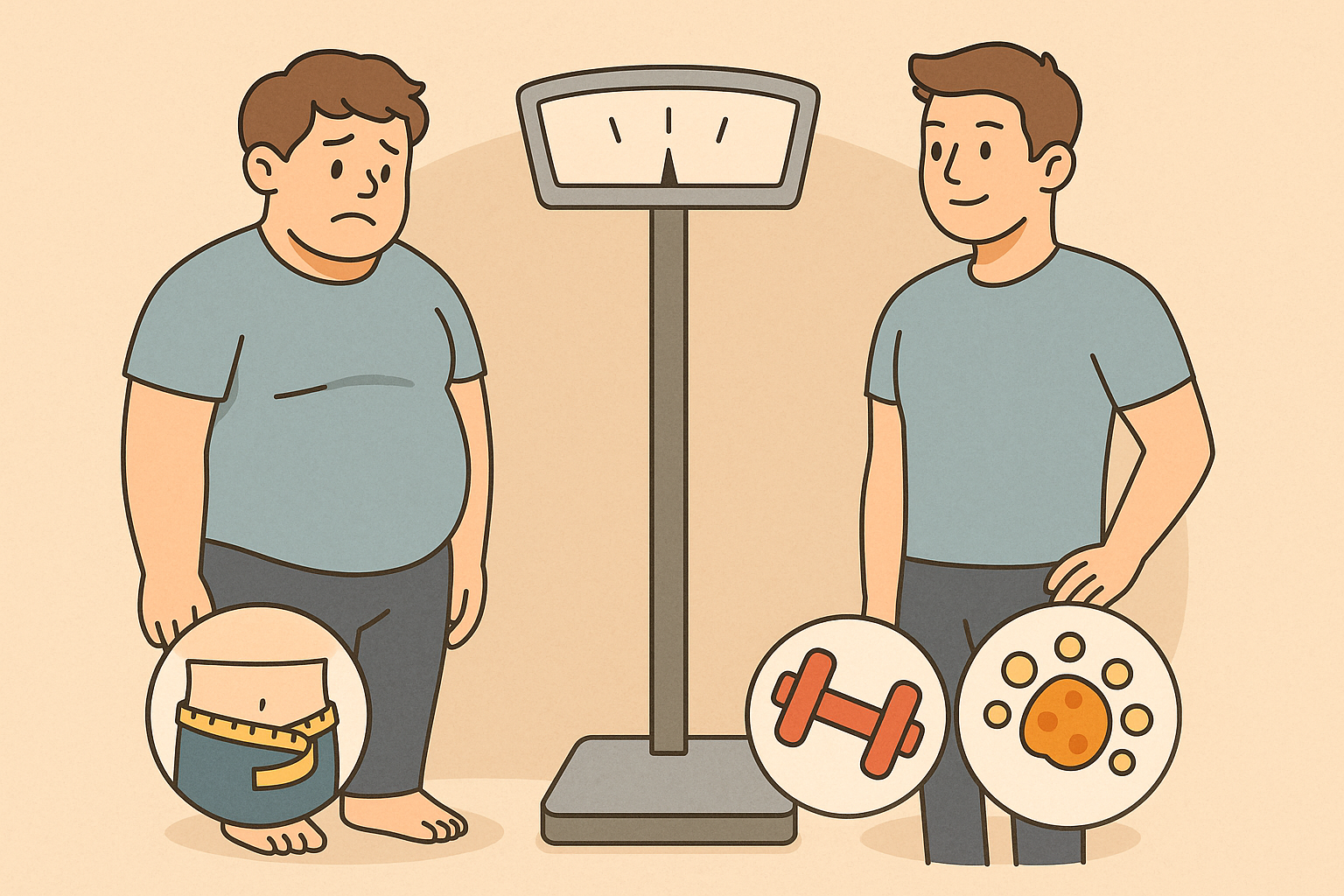
4. Muscle Indicators: ‘Strength’ Matters More Than Muscle Mass
Muscle mass measurements vary significantly by device, so it's more practical to use performance indicators like grip strength and squat repetitions. Aim for an intermediate goal of 40% or more of body weight in one-handed grip strength and 25 or more repetitions per minute in bodyweight squats, gradually increasing over time.
5. Understanding Body Water and Daily Fluctuations
Salt intake, menstrual cycles, and sleep deprivation cause temporary water retention that affects weight. Weighing at the same time daily (immediately after waking and using the restroom) helps filter out false fluctuations.
6. Cardiorespiratory Fitness: 6-Minute Walk & Heart Rate Recovery
Walking briskly for 6 minutes and recording distance covered and breathlessness shows changes faster than weight. If your heart rate drops 20 beats or more within 1 minute after exercise, your recovery is considered good.
7. Metabolic Health: Final Confirmation via Blood Tests
Fasting blood sugar, HbA1c, triglyceride/HDL ratio, and blood pressure are your health report card showing the outcome of body fat distribution. Even with the same weight, improvements in waist circumference and body fat percentage tend to improve these numbers together.
8. Measurement Frequency and Recording Method
Weight and body fat percentage are measured once a week. Waist circumference, grip strength, and walking distance are measured every other week. Blood tests are checked at 3–6 month intervals. Record data using an app or spreadsheet to create graphs and focus solely on trends (ignoring daily fluctuations).
9. Numbers → Action Routines
If abdominal fat is the issue, first establish a 10–15 minute walk after meals + 150 minutes of aerobic exercise per week. If muscle loss is observed, proceed with 2–3 resistance training sessions per week and 1.0–1.2g/kg of body weight in protein as your mission.
The scale's number is just the beginning. When you interpret body fat percentage, waist-to-height ratio, muscle strength, cardiorespiratory fitness, and metabolic markers together, your goals become clear and sustainable change begins. Today, focus on these three actions: measure your waist circumference, walk for 10 minutes after meals, and do 30 squats. Don't be driven by the numbers; become someone who puts the numbers to work.


댓글